

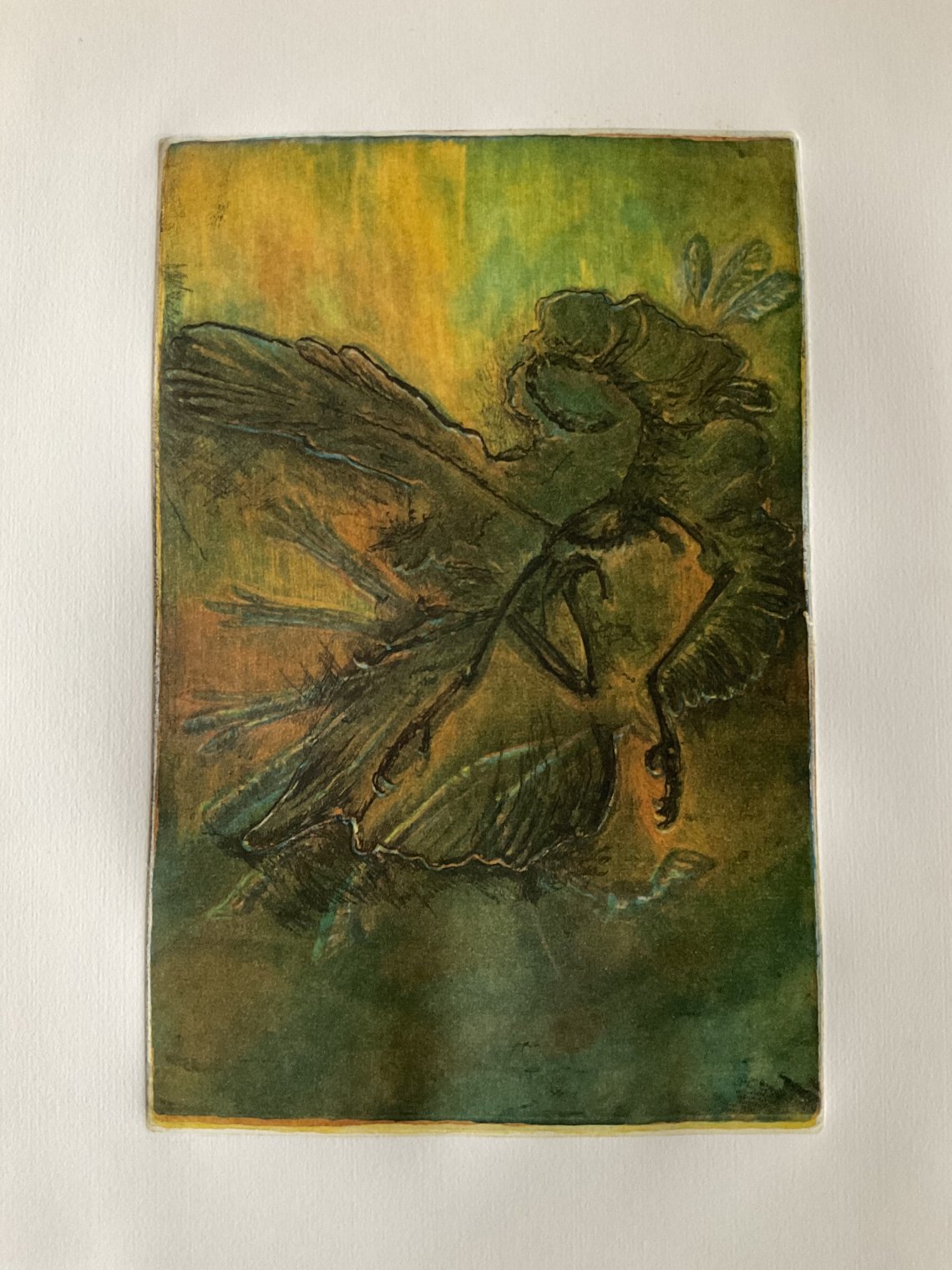
Artwork title : Exaptation
Exaptation
2024
cm 30 x 40 (matrici)
Stampa calcografica a più battute in quadricromia
Maniera nera e ceramolle
multiplate print in four colurs - mezzotint and soft-ground etching
This work is inspired by and dedicatet to the evolutional phenomenon called exaptation by S.J. Gould and E.S. Vrba, two biologists whose research about the relations between shape and function in Evolution has led to a transformatie in the concept of natural selection, opening a path for chance and randomness, thus eradicating determinism.
I overlappen two images which I found to be significant on this topic: the fossile from Altmühl - only example of the Archaeopterix that holds precise trace of the feathered wings, testifyng the aptation of the feather’s function from termoregulation to flight; a sequence of forelimb bones of different evolutionary fases in the horse, from multiple digits to the single toe, perfectioned for running in the prairie, and studies by Gould.
The race and the flight, both images of freedom, marge in the atavic dimensie of the fossile, evoking a regeneratie that devies as well from abandoning deterministic thoughtlines, as from reconnecting with the energy of primordial jurassic life.
The techique used is based on accurate study of the work of J.C. Le Blon, fahter of multiplate polichrome mezzotint in the eighteenth century.
L’isprazione di quest’opera é dedicata al fenomeno evolutivo o attativo battezzato exaptation da S.J. Gould ed E.S. Vrba, biologi le cui ricerche sui rapporti evolutivi tra forma e funzione dei caratteri degli esseri viventi hanno contribuito a trasformare il concetto di selezione naturale, aprendolo a casualità e contingenza, eradicando per sempre il determinismo.
Ho sovrapposto due immagini he ho ritenuto significative in questo contesto: il fossile di Altmühl - unico esemplare del dinosauro Archaeopteryx che conserva la precisa impronta del piumaggio delle ali, esempio dell’adattamento della piuma dalla sua iniziale funzione termoregolatrice a quella del volo; l’accostamento di ossa dell’arto anteriore del cavallo in diverse fasi evolutive, illustranti il passaggio dalla struttura iniziale a cinque dita fino all’unico zoccolo, perfezionato per la corsa nelle praterie e daggetto delig studie di Gould.
La corsa e il volo, entrambe immagini di libertà, si fondono nella dimensione atavica del fossile, evocando una rigenerazione che deriva insieme dall’abbandono del penisero determinista e dal ricongiungimento con l’energia dei primordi della vita giurassica.
La tecnica usata è basta su studio accurate del lavoro di J.C. Le Blon, padre della stampa policroma tramite incisione calcografica e del principe della tricromia.

All right reserved - copyright © Malamegi Lab - www.lab.malamegi.com