

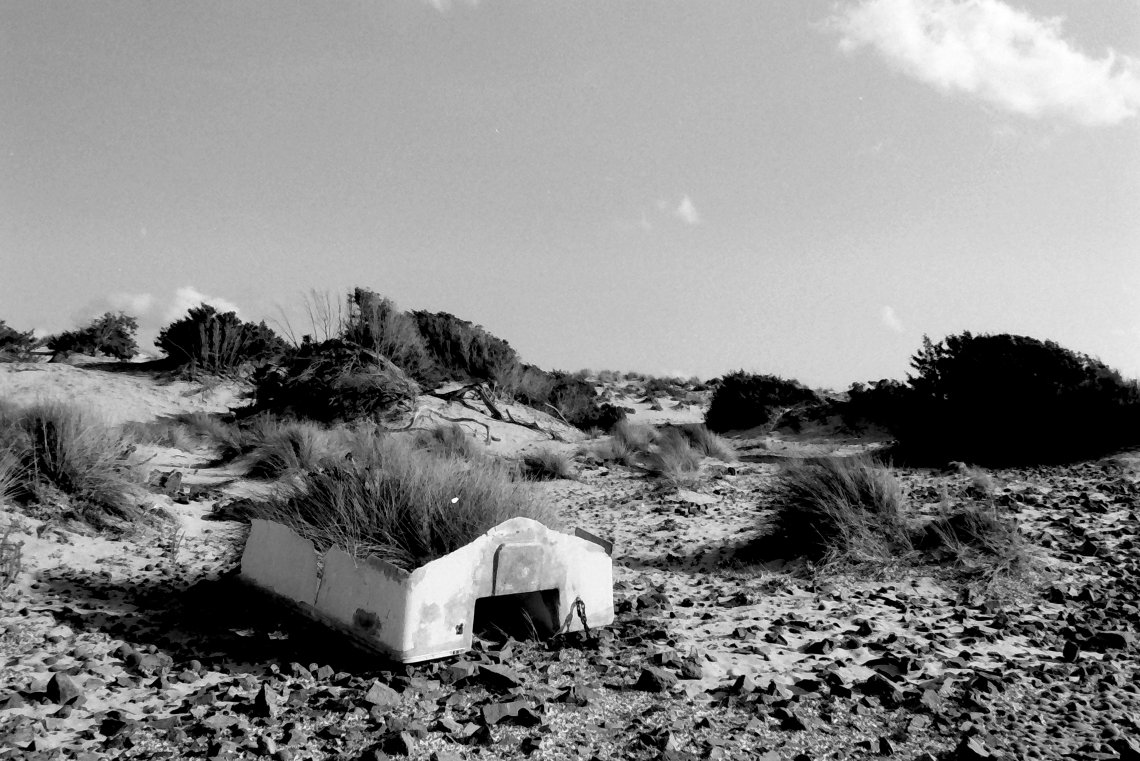
Artwork title : What is left behind
The picture, which is part of a photo series, is a black-and-white analogue study of the quiet objects left behind on a deserted, beach—fragments of nature's remnants, captured in sharp detail and stillness. The frame is filled with close-up details of objects abandoned by the relentless tides, pieces of nature that once lived but now lie in varying states of decay. The absence of color adds to the sense of isolation, distilling the scene down to pure form, shadow, and light. Each object seems to exist outside of time, its texture and shape rendered in stark contrast. There are no living creatures here, only the mute testimony of nature’s cycle—life followed by death, death followed by transformation.
The image speaks to the inescapable truth of nature's cycle—a constant ebb and flow between creation and decay. The landscape, though barren in this moment, is far from lifeless. Nothing here is static; even in its stillness, there is the promise of change, an implicit promise of rebirth. Nature does not mourn its losses; it simply continues, its rhythm indifferent yet eternal.
This image, with its focus on quiet objects, offers a meditation on the contrast between the cycles of nature and the consciousness of living beings. It is about the balance between life and death, and between permanence and transience. For humans, for creatures with heart and soul, life is a fragile, fleeting thing, full of awareness and meaning. Unlike the land, which simply shifts and erodes, we live not only through our physical presence. We feel the weight of our mortality, and in doing so, we are both a part of and separate from the natural world. Our hearts beat with a different kind of rhythm—one that knows it will end, and yet finds meaning in the time between. The objects depicted—though lifeless in their current form— are part of an endless process of change that occurs without sentiment or urgency. They simply are. The process will continue, as it always has. And yet, they hold a kind of quiet wisdom, offering us a glimpse into the rhythms of existence that transcend our own fleeting lives. What seems still is always in flux. The land is constantly changing, even when it appears abandoned.
There is an impermanence in all things, yet in that impermanence lies the potential for resurrection, for transformation.
In these charged, polarized times, the importance of art becomes all the more evident. Art is not beholden to any ideology, nor does it need to be a weapon in the cultural battle of the moment. It holds space for reflection, for something quieter than the noise of the world. Art, in its purest form, is not bound by the political moment. It is a space for stillness, for inward reflection, and for a deeper understanding of the rhythms that govern life. This photograph, with its spare landscape and subtle power, offers a meditation on the passage of time, the inevitability of decay, and the quiet persistence of nature. In a world so full of external turmoil, it is a reminder that the most profound truths are often found when we turn inward, when we pause before rushing headlong into conflict. Before the world collides against itself, perhaps it is time to pause and reflect, to listen to the silent lessons of the natural world, and to find meaning in its stillness, rather than in the noise that surrounds us.
Scanned analogue photograph. Negatives processed in Microphen.
Original is framed 20 cm x 30 cm

All right reserved - copyright © Malamegi Lab - www.lab.malamegi.com