

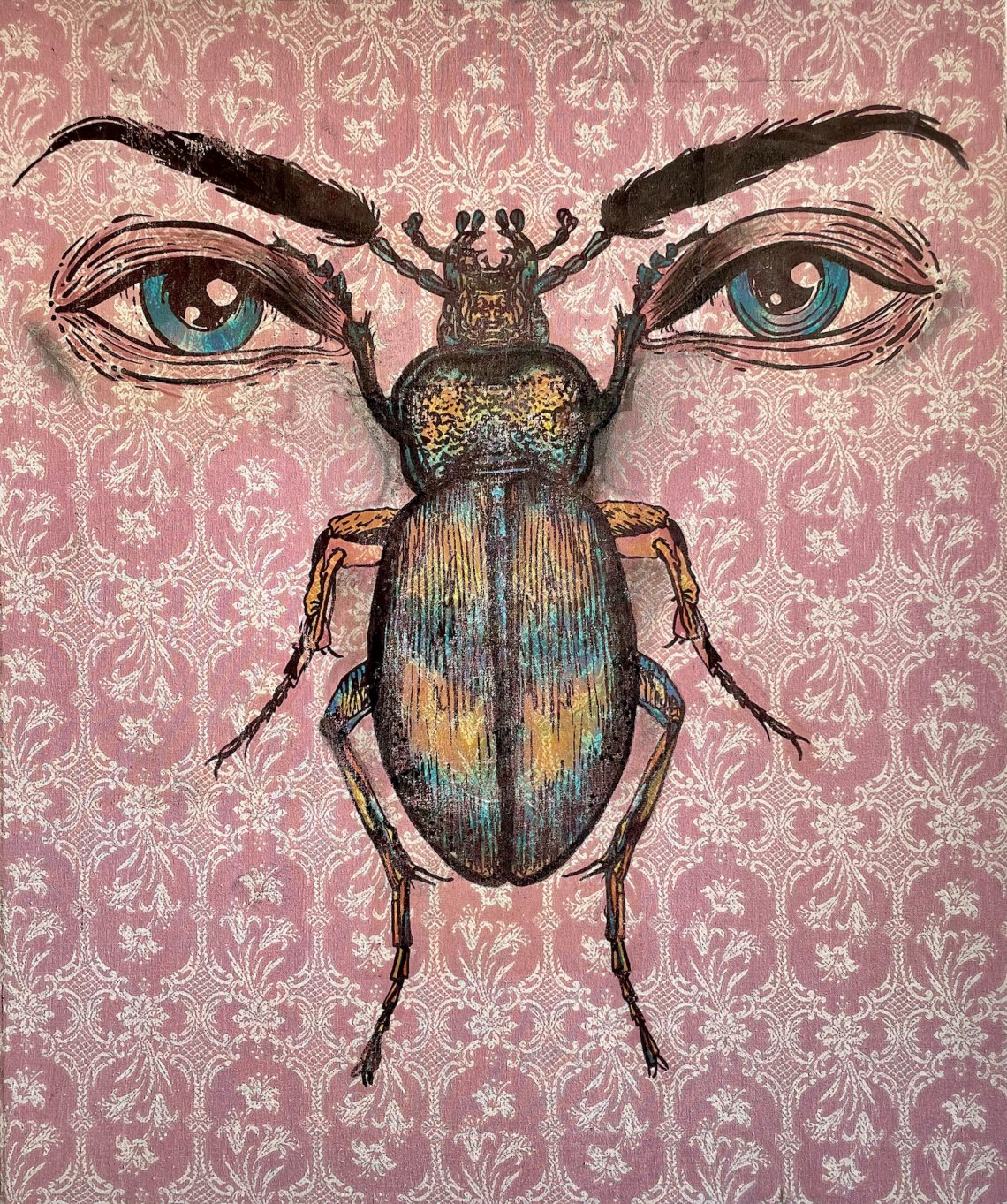
Artwork title : Sirius
"To the earliest Egyptians, Sirius/Sothis was the home of departed souls. In the Isis-Hathor Temple of Denderah, the priests hasten along the columned aisle to witness an important event. The temple is dedicated to Isis, a statue of the goddess is located at the end of the aisle. On the summer solstice; the priests wait to watch Sirius rise and its rays penetrate the temple to fall on Isis's gem. The appearance of Sepdet lasts only for a brief moment before Ra brightens the sky. When the star begins to flicker low on the horizon it marks the beginning of a New Year in Ancient Egypt. The Egyptians referred to the heliacal rising and its associated festival as prt spdt, "the going forth of Sepdet". The star hid for 70 days, and now it has returned from the duat(underworld) to bring welfare to the land and to allow its people to bury their dead. The 70 days of the star's invisibility is due to the dominance of sunlight in this period." - Assem Deif, Cairo University
In Egyptian history the scarab beetle also often represented rebirth and and renewal. They were closely associated to the sun god. because scarabs roll large balls of dung in which to lay their eggs, a behavior that the Egyptians thought resembled the progression of the sun through the sky from east to west. Scarab amulets were used for their magical rejuvenating properties by both the living and the dead.

All right reserved - copyright © Malamegi Lab - www.lab.malamegi.com