

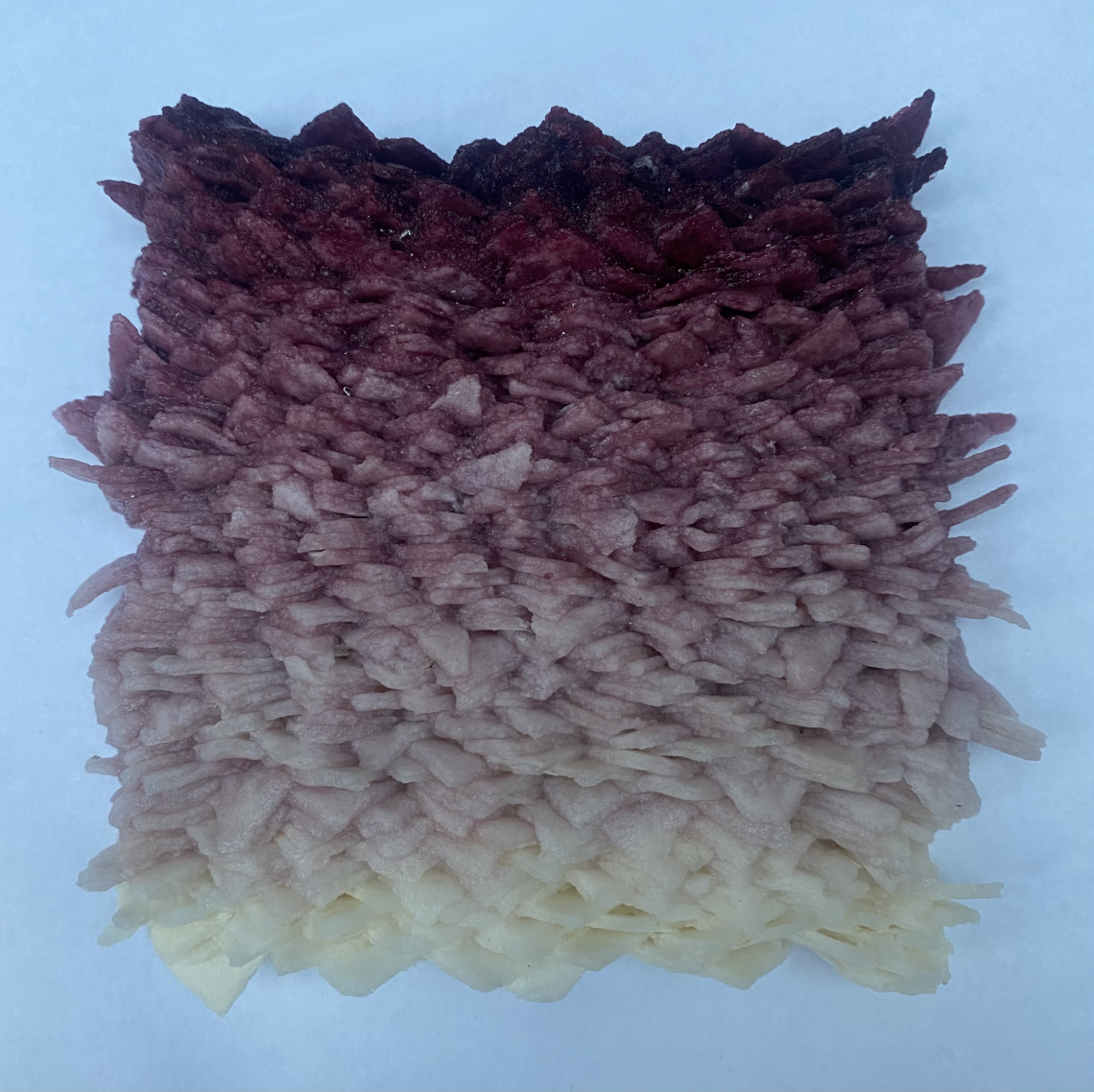
Artwork title : Tuam 1
In Tuam, Co. Galway, Ireland, there once stood an institution known as the Bon Secours Mother and Baby Home, operated by the Bon Secours Sisters. Unmarried pregnant women were sent there to give birth. As there was great shame attached to women in this situation, these homes offered a place where they could give birth away from the maternity wards of public hospitals where they might be recognised by those in their community. The children birthed by these women remained in the home until they were adopted or transferred to the Industrial Schools system to learn a trade. In most cases, the mothers never saw their babies again. The home operated from 1925 until 1961 but other such institutions were running in Ireland until the 1990s.
In 2014, it emerged that the Sisters had been burying infants who died at the home in a mass grave concealed within a septic tank on the institution’s grounds. Official records cite that there were 791 child deaths, but the true number is believed to be higher. This revelation sparked a national scandal, leaving many painful questions about the fate of the children born in the home still unanswered. Excavations and forensic work is now underway in an effort to identify the remains discovered at the site which has been quite difficult due to the density of the burials at the site. The babies and foetal remains were tightly packed into piles with the oldest remains pressed into the ground at the bottom and the more recently deceased piled into the top.
In earlier work, I used Catholic communion wafers and wine to explore another institution in the Galway area: St. Joseph’s Industrial School which was run by the Christian Brothers. This institution was infamous for widespread sexual abuse and neglect of the boys who were sent there. Children in institutions like St. Mary’s and St. Joseph’s were cruelly ostracised by Irish society as a heavy social stigma was attached to attending such institutions. Notably, the words stigma and stigmata share the same Latin root, meaning 'to mark, brand, or puncture.' My previous piece, Stigmata, created in response to St. Joseph’s Industrial School, used 2,819 communion wafers which were stained or damaged with red wine to represent the lasting legacy of cruelty and brutal physical abuse of the school.
This new work, Tuam 1, uses small, crushed communion wafers and wine to represent the fate of the nameless infants who were callously entombed together in the mass grave at Tuam. The wine is denser at the top, bleeding down through the layers of wafer, creating a meat-like form until it reaches the white, bone-like fragments at the bottom. I

All right reserved - copyright © Malamegi Lab - www.lab.malamegi.com